Introduction of the Application
Sings Some Great Songs, Pt. 4 by Hughie Mac. Sings Some Great Songs, Pt. Get the music: Spotify Apple Music iTunes Deezer. Buy from Artist. Make Offer - 2009 Mac Pro 4,1 Flashed to 5,1/ 3.33ghz/ 32gb Ram/ Upgraded GPU/ SSD/ MB871LL/A Apple Mac Pro Tower 5,1 Six 6-Core 3.46Ghz Westmere 64GB 4TB NVIDIA GTX 680 2GB $2,375.00. Mac OS X Tiger (version 10.4) is the fifth major release of Mac OS X, Apple's desktop and server operating system for Mac computers. Tiger was released to the public on April 29, 2005 for US$129.95 as the successor to Mac OS X 10.3 Panther.Some of the new features included a fast searching system called Spotlight, a new version of the Safari web browser, Dashboard, a new 'Unified' theme,. Using the built-in SSH client in Mac OS X. Mac OS X includes a command-line SSH client as part of the operating system. To use it, goto Finder, and selext Go - Utilities from the top menu. Then look for Terminal. Terminal can be used to get a local terminal window. 3/8' Drive Impact Socket 3/4' - 6-PT. $17.99 Add to cart. Add To Wish List: Related Sets. Part # Product Name. Mac Tools Franchise Atlanta; Mac Tools Franchise Chicago; Mac Tools Franchise Dallas; Mac Tools Franchise Houston; Mac Tools Franchise Los Angeles; Mac Tools Franchise Memphis.
This application supports wired or wireless connection of screen display images from a computer to a wireless ready Panasonic projector.
Be sure to uninstall the old version of the software before upgrading to the new version.
Compatible Projector Models
PT-MZ770/MZ670/MZ570/MW730/MW630/MW530
PT-VZ585N/VW545N/VX615N
PT-VZ575N/VW535N/VX605N
PT-VW355N/VX425N
PT-VW435N/VX505N (Discontinued models)
PT-VW345NZ/VX415NZ (Discontinued models)
PT-JX200/JW130
Note: Application is possible to the following models, but restrictions vary depending on the model.
For details, see the List of compatible projector models.
PT-DZ570* / DW530* / DX500* / FW430* / FX400* / FW300NT / FW300** / F300NT / F300**/ VX400NT / LB90NT / LW80NT / LB80NT / LB75NT
* To operate wireless projection, the optional Wireless Module ET-WM200 is required.
** The PT-FW300 and PT-F300 support a wired LAN system only.
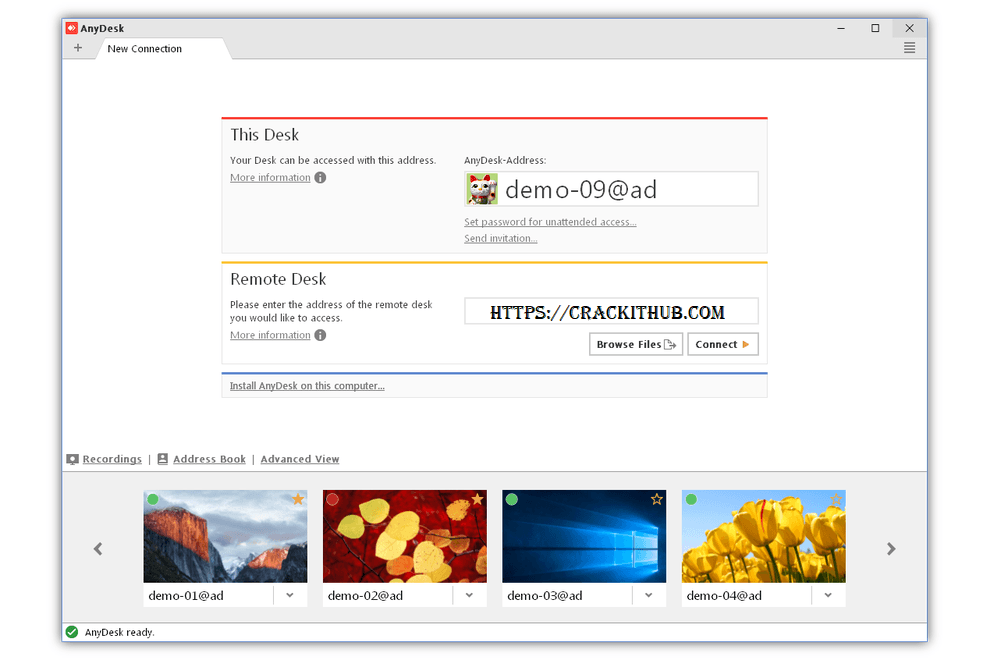
Pt 4 For Mac Keyboard
Latest Version
Version 6.4 (6.4.0 (24))
Click buttons below to check out version information.

Update information from Version 6.3 (6.3.0 (15))
- Supports MacOS Mojave 10.14
Application Guidance Video
NOTE: Wireless Manager ME 6.3 is used in this video as an example. Images used in this video may differ from those shown on your screen.
System Requirements
The computer must meet the following requirements in order to use the supplied software.
| OS | Apple Mac OS X v10.10 / v10.11, macOS Sierra/High Sierra/Mojave/Catalina * The Japanese, English and Chinese versions of the above operating systems are supported. * Operation is guaranteed only with preinstalled or clean-installed operating systems. |
|---|---|
| CPU | Intel Core 2 Duo or higher processor or compatible processor installed. Intel Core i5 or higher recommended for projection. |
| RAM | 1,024 MB or more |
| Hard disk | At least 100 MB free space (Extra free space is required to save the projector information.) |
| LAN environment | For connection by wired LAN: LAN terminal (10BASE-T/100BASE-TX/1000BASE-T) is necessary. For connection by wireless LAN: Wireless LAN adapter (IEEE 802.11b/g/n/a standard compliance) is necessary. |
| Monitor screen | High Color (16 bits) or up |
| Desktop area | 1024 dots x 768 dots or more, 2880 dots x 1800 dots or less |
| Web browser | Safari 8.0/9.0/10.0/11.0/12.0/13.0 (For the WEB Control function, Browser Remote Control function, moderator mode, and Content Manager function.) |
NOTE:
• If you are logged in to a “normal” user account, sound may not be output from the computer. If sound is not output from the internal speakers, quit this software, and then make sure that “Internal Speakers” is selected in “Output” of “Sound” in “System Preferences”. If it is not selected, manually switch to “Internal Speakers”.
• On a computer that has an automatic graphics switching function, projection may fail if “System Configuration” →“Energy Saving” → “Automatic Graphics Switching” is enabled. If projection fails, disable this function.
• When connecting under the IEEE802.11n standard, the wireless LAN adapter, projector and access point used must all support the 11n standard.
• When using the projector at the [S-DIRECT] or [M-DIRECT] setting, use a wireless LAN adapter that supports “WPA2/AES”.
• The “App Nap” function may cause image display to stop. In such cases, disable the “App Nap” function. For details on disabling the function, see “Image display stops” in Frequently Asked Questions section.
• For a projector, the display resolution of projected images differs depending on the aspect ratio of the display device of the projector used.
- When 4:3: Images of 1024 x 768 dots are displayed with the number of display dots of the projector.
- When other than 4:3: Images of 1280 x 800 dots are displayed with the number of display dots of the projector.

• For a flat-panel display, images of 1280 x 800 dots are displayed with the number of display dots of the flat-panel display.
Operation is not guaranteed for all computers that meet the above conditions.
Downloading and Installing the Software
- Click the 'Download' button above.
- Double-click “Wireless Manager” on the virtual disk that has been mounted.
- The installer starts up. Follow the on-screen instructions to install the software.
- Click [Restart].
For specific installation instructions, refer to the following manual.
Operating Instructions of Wireless Manager ME 6.4 for Mac
Pt 4 For Mac Download
Mac, Mac OS X and macOS are trademarks or registered trademarks of Apple Inc. in the United States and/or other countries.
Intel and Intel Core i5 are trademarks or registered trademarks of Intel Corporation or its subsidiaries in the United States and/or other countries.
Pt 4 For Mac Catalina
Other company names, product names, or other names noted on this page are trademarks or registered trademarks of the respective companies. Note that ® and ™ marks are not indicated on the text of this page.
>>This [mp3] famous Mac startup sound (still installed in every new Mac) was recorded Jim Reekes, and first used on the Quadra 700, which launched in 1991 costing $7,000.
>> Jim's most famous pop-culture moment was the scene in Jurassic Park where the park's computers are all rebooted with his sound. But it's most awesome musical use is as the bassline in Transformer di Roboter's ace cover of 'Stranger in Moscow' - here [mp3]
>> Jim 'came out' about creating various Mac sounds (most famously Sosumi) to Boing Boing last month. But he's never before revealed how he actually made them:
>> 'The startup sound was done in my home studio on a Korg Wavestation. It's a C Major chord, played with both hands stretched out as wide as possible (with 3rd at the top, if I recall). This just sounded right to me. I wanted something really fat, heavy bass, high notes, and a sharp attack. The chiffy sound was from pan pipes and something like a stick hit (I'm testing my memory here). I wanted lots of evolving timbres, stereo phasing, and reverb for further richness.'
>>'Mac people are very familiar with the sound, after restarting their machines too often. In fact, that was one of the issues I was conscious of when designing the sound. Turning the Mac on is one thing, but being forced to reboot from a crash is a totally different experience. I wanted to avoid a sound that would be associated with the crash. I wanted it to sound more like a 'palette cleanser'.
>>'After I changed the startup sound (which required much persuasion and working around the system) the ROM engineers continued changing it with each new machine. Some of them were weak, such as the Stanley Jordon guitar strum used on the first PowerMacs. I objected to it, because that sound had no 'power'. The engineer wasn't a recording engineer, and not familiar enough with audio. The sound was hallow and without depth. When Steve Jobs returned in 1997, I heard he wanted only one sound for all Macs. He wanted the 'good one' which was the one I created. At least that's how I heard the story, and I was still working there at the time.'
>> If you're concerned that you don't know enough about vintage Mac Startup sounds, I can recommend Mactracker, which runs on Mac or PC. Don't show it to your girlfriend.
NEXT UP: The Lord who earned £1000 a week from four notes
PREVIOUSLY: The THX Sound Posted by Tom Whitwell.